Share
Linkedin
Twitter
Facebook
Whatsapp
Copy Link
Ranvir Sachdeva, an eight-year-old coder, made history as the youngest speaker at India AI Impact Summit 2026 in New Delhi. He addressed global tech leaders about linking ancient Indian philosophies with modern Artificial Intelligence and met Google CEO Sundar Pichai and OpenAI CEO Sam Altman at the event.
ChatGPT solved a complex gluon amplitude problem that had stumped theoretical physicists for decades, proving that certain particle interactions previously thought impossible can actually occur. Working alongside Andrew Strominger and a team of researchers, the AI simplified complex mathematical expressions and generated a proof in just 12 hours—what might have taken humans indefinitely to solve.
Chinese tech giant ByteDance is hiring nearly 100 people for its US-based AI teams within its Seed division, expanding capabilities in large language models, video generation, and drug discovery. The move comes despite ongoing national security concerns and recent intellectual property disputes with Hollywood studios over its Seedance 2.0 video generation tool.
Former Google DeepMind scientist David Silver is raising $1 billion for his startup Ineffable Intelligence, led by Sequoia Capital at a $4 billion valuation. The London-based company aims to build superhuman intelligence using advanced reinforcement learning techniques, with potential backing from Nvidia, Google, and Microsoft despite having no product yet.
Microsoft's Project Silica has demonstrated a breakthrough in glass data storage technology that could preserve information for more than 10,000 years. Using femtosecond lasers to etch data into silica glass plates, the system offers a sustainable alternative to traditional data centres while withstanding extreme temperatures and environmental conditions.
Tempus AI shares climbed Wednesday following the launch of its new HRD-RNA algorithm, an AI-driven tool designed to detect homologous recombination deficiency in tumors. The algorithm analyzes gene expression to identify patients who may benefit from platinum-based chemotherapy or PARP inhibitors, offering a more dynamic assessment than traditional genomic methods.
Researchers used virtual reality to discover that AI-powered prosthetic arms feel most like part of the body when they move at a moderate pace of about one second. The study tested six different speeds and found that both overly fast and slow movements reduced body ownership and usability, revealing critical design insights for future autonomous prosthetics.
Google has released a major upgrade to Gemini 3 Deep Think, its specialized AI reasoning model designed for scientific research. The update achieves record-breaking scores on benchmarks like ARC-AGI-2 (84.6%) and Humanity's Last Exam (48.4%), outperforming OpenAI's GPT-5.2 and Anthropic's Claude Opus 4.6. Real-world applications include identifying peer review flaws in mathematics papers and optimizing semiconductor fabrication methods.
Google DeepMind CEO Demis Hassabis forecasts artificial general intelligence arriving within 5-8 years, with impact 10 times greater than the Industrial Revolution. The Nobel laureate warns AI's 'jagged intelligence' must be fixed first, while predicting a renaissance in medicine, energy, and space exploration within 10-15 years.
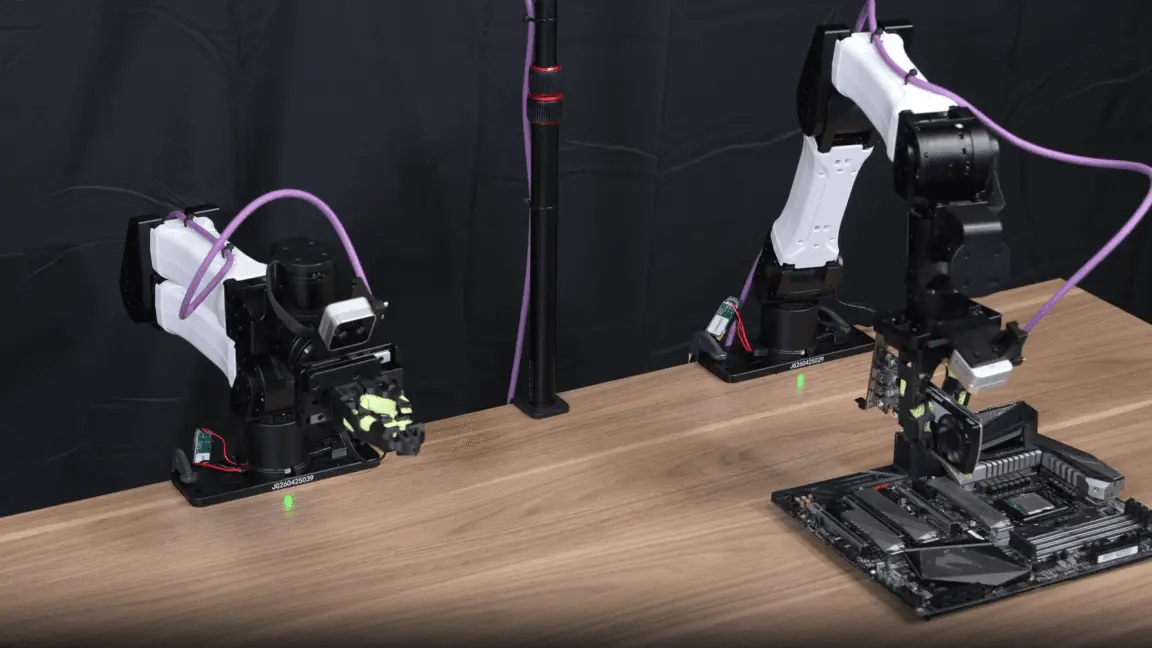
Alibaba unveiled RynnBrain, an artificial intelligence model designed to power robots through enhanced understanding of the physical world. The model set 16 robotics records, surpassing achievements by Google and NVIDIA. RynnBrain addresses critical weaknesses in existing robotics systems through spatiotemporal memory, as China intensifies its push into physical AI to compete with the United States for technological leadership.
Mrinank Sharma, head of Anthropic's safeguards research team, resigned citing concerns about AI safety and company values. His departure joins a growing exodus from major AI labs including OpenAI and xAI, with researchers warning about existential threats, ethical concerns, and the rapid advancement of AI systems capable of self-improvement.
A mysterious limestone tablet discovered in the Netherlands has puzzled researchers for over a century. Now, artificial intelligence has cracked the code, revealing it as a blocking game played by Romans—centuries earlier than such games were thought to exist in Europe. The breakthrough demonstrates how AI simulations can unlock secrets of ancient cultures.
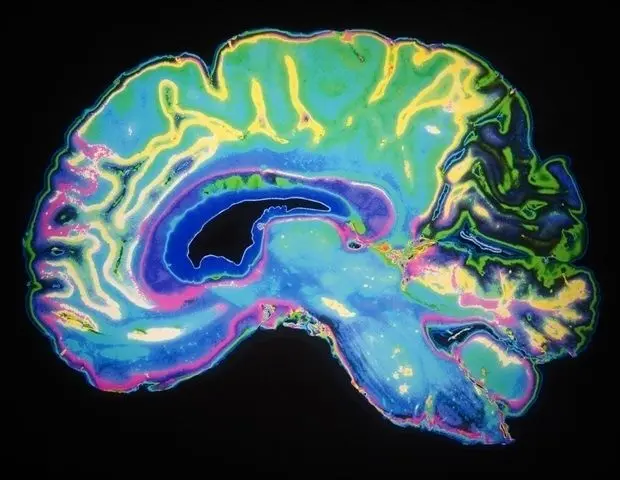
Researchers from MIT, Harvard, and Massachusetts General Hospital have developed the BrainStem Bundle Tool (BSBT), an AI-powered software that automatically segments eight distinct nerve bundles in the brainstem using diffusion MRI. The tool revealed distinct patterns in patients with Parkinson's disease, multiple sclerosis, traumatic brain injury, and Alzheimer's, and tracked a coma patient's 7-month recovery.
Pittsburgh-based Gather AI has raised $40 million in Series B funding to expand its Physical AI platform that uses drones and computer vision to solve warehouse inventory challenges. Led by former Salesforce co-CEO Keith Block's firm, the investment will help scale the technology across hundreds of facilities globally as the company grows bookings by 250%.
Japan's Takeda Pharmaceutical has partnered with AI startup Iambic in a deal exceeding $1.7 billion to design small-molecule drugs targeting cancer and gastrointestinal diseases. The collaboration leverages Iambic's NeuralPLexer model to predict protein binding, potentially compressing traditional six-year drug discovery timelines to less than two years through AI predictions and automated laboratories.
Don’t drown in AI news. We cut through the noise - filtering, ranking and summarizing the most important AI news, breakthroughs and research daily. Follow topics that matter to you and stay ahead.