Share
Linkedin
Twitter
Facebook
Whatsapp
Copy Link
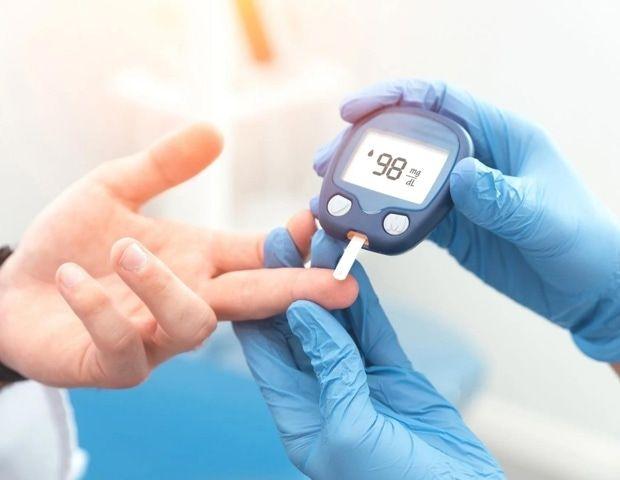
New research shows artificial intelligence-powered stethoscopes can detect heart valve disease with 92% accuracy compared to 46% using traditional methods. The AI algorithm identified twice as many cases of previously undiagnosed moderate-to-severe disease, potentially enabling earlier treatment and saving thousands of lives.
Google-spinoff Waymo introduced its World Model built on DeepMind's Genie 3 to create hyper-realistic virtual environments for autonomous vehicle training. The system allows engineers to test self-driving cars against rare scenarios like tornadoes, flooded streets, and rogue elephants—situations that may never appear in the company's 200 million miles of real-world driving data but could prove critical for safety.
Researchers developed an AI-powered approach that analyzes eight distinct traits in dinosaur footprints to determine which species left them. The algorithm examined 1,974 footprint silhouettes spanning 150 million years, offering paleontologists an objective tool to solve a challenge that has sparked debate for generations.
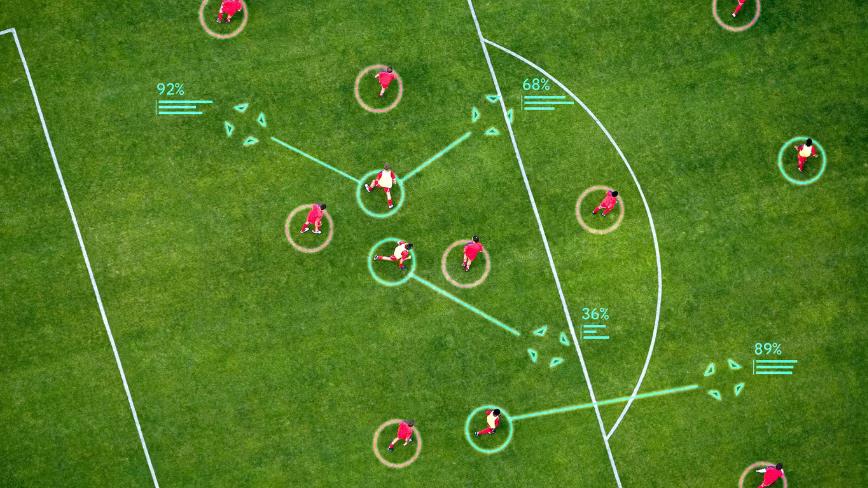
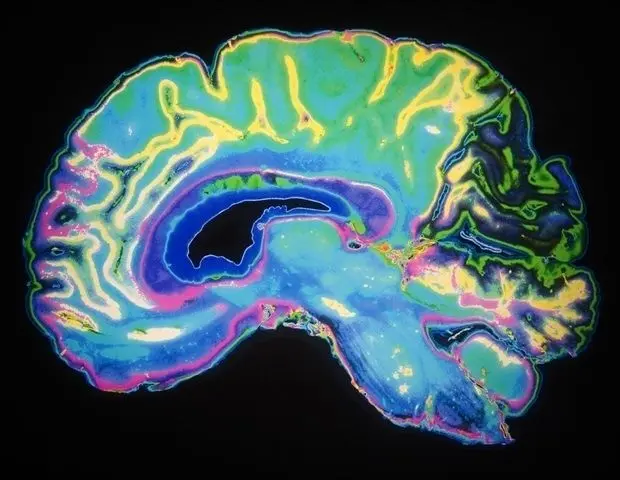
Researchers at University of Michigan developed Prima, an AI model that analyzes brain MRI scans and delivers diagnoses in seconds with up to 97.5% accuracy. Trained on over 220,000 MRI studies, Prima can prioritize emergency cases like strokes and brain hemorrhages, automatically alerting specialists. The system aims to address growing radiology shortages and reduce diagnostic delays across health systems.
Atlassian CEO Mike Cannon-Brookes told investors the company can scale its Rovo agentic AI offering to five million users without inflating AI costs or hurting margins. Despite shares falling 70% over twelve months and $826 million in quarterly R&D spending, the CEO insists AI strengthens rather than threatens the collaborationware giant's business model.
Goodfire has raised $150 million in Series B funding at a $1.25 billion valuation to advance AI interpretability research. The startup creates interpreter models to decode neural networks and understand how AI models make decisions. CEO Eric Ho warns the industry is moving too fast without understanding the technology it's deploying.
Academic researchers unveiled OpenScholar, an open-source AI tool that outperformed major LLMs like GPT-4o in scientific literature reviews. The system combines a language model with 45 million open-access articles to deliver accurate citations without hallucinations. Over 30,000 scientists have already tested the free tool since its debut.
Roblox has launched its 4D creation feature in open beta, enabling users to generate fully functioning in-game models using natural language prompts. The tool builds on the company's Cube 3D model, which has generated over 1.8 million static 3D objects since March. The new feature adds interactivity, allowing creators to design vehicles with working doors and accurate physics mechanics, marking a significant step in Roblox's broader AI world models strategy.
OpenAI CEO Sam Altman revealed the company may invest in or subsidize firms using its AI for drug discovery, taking royalties on successful discoveries instead of charging upfront costs. Speaking at Cisco's AI conference, Altman outlined a potential shift from traditional software pricing to outcome-based financial returns, where OpenAI shares both risk and reward in scientific breakthroughs.
Elon Musk's xAI is hiring crypto finance experts to teach its AI systems how professional traders analyze on-chain data, evaluate token economics, and manage risk. The remote role pays $45-$100 per hour and focuses on building AI reasoning capabilities for volatile, 24/7 crypto markets rather than simple price prediction.
Apple researchers have published a breakthrough study proposing a new text-to-speech approach that could dramatically improve Siri's performance. The research introduces Acoustic Similarity Groups (ASGs) to accelerate speech token generation while maintaining quality, potentially addressing long-standing complaints about the voice assistant's sluggish response time.
Harvard Medical School researchers have identified contextual errors as a major barrier preventing medical AI from transitioning into real-world clinical use. Despite thousands of models being developed, very few succeed in hospitals because they lack critical information about medical specialty, geographic location, and socioeconomic factors needed for accurate patient care.
Anthropic and University of Toronto researchers analyzed 1.5 million conversations with Claude and found troubling disempowerment patterns. Reality distortion occurred in one in 1,300 chats, while action distortion appeared in one in 6,000 conversations. The study reveals AI chatbots can undermine human autonomy by validating biases and influencing beliefs, with users paradoxically rating these distorting interactions more favorably.
Apple has lost at least four AI researchers and a top Siri executive to competitors including Google DeepMind and Meta in recent weeks. The departures underscore ongoing turbulence within Apple's AI division as the company struggles to retain talent amid its decision to outsource key technology to Google.
Two major studies reveal a nuanced picture of AI creativity versus human creativity. While generative AI scored better than average participants in a 100,000-person creativity experiment, the top 10% of humans far exceeded AI performance. Separately, CMU research found AI-generated music was judged less creative than human compositions, highlighting the complex relationship between AI and humans in creative fields.
Don’t drown in AI news. We cut through the noise - filtering, ranking and summarizing the most important AI news, breakthroughs and research daily. Follow topics that matter to you and stay ahead.