Share
Linkedin
Twitter
Facebook
Whatsapp
Copy Link
Professionals across industries are integrating AI into daily workflows with practical results. Teachers grade 100 papers in 30 minutes instead of a week. Marketing teams analyze trade show prospects in hours rather than days. Product managers use Claude to decode technical conversations they don't understand. These real-world applications demonstrate how AI tools are boosting efficiency and productivity without replacing human judgment.
OpenAI president Greg Brockman revealed that AI coding tools now write roughly 80% of the company's code, a dramatic leap from 20% in just one month last December. While AI labs tout transformative productivity gains, independent research questions whether these internal metrics translate to measurable business impact, with some studies showing zero ROI from AI adoption.
Warhorse Studios confronted intense scrutiny during a Reddit AMA after former translator Max Hejtmanek revealed he was fired and allegedly replaced by AI. The Kingdom Come: Deliverance 2 developer insists it values human creativity and uses AI only in early production stages, while dodging direct questions about the dismissal. The studio says it's hiring human translators, but the controversy highlights growing tensions around AI replacing creative professionals in game development.
Google Meet enhances its AI-powered 'take notes for me' feature with new customization options that let users control which sections appear in their meeting notes. The feature update introduces a Decisions section that tracks outcomes and their status, while making the Summary section more concise and scannable for easier review.
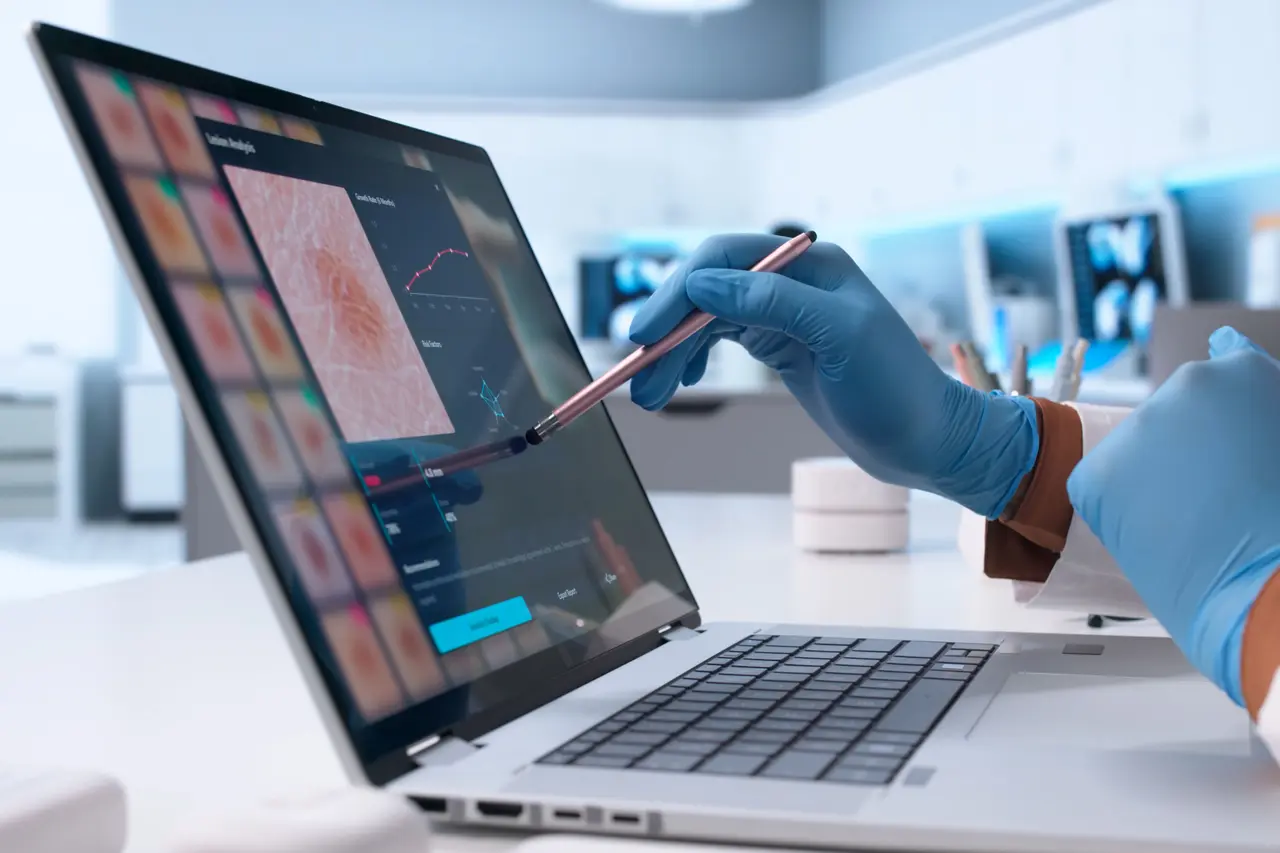
A Harvard Medical School study published in Science reveals that OpenAI's o1 model achieved 67% diagnostic accuracy at emergency room triage, outperforming two attending physicians who scored 55% and 50%. The research tested AI against doctors using real patient data from Beth Israel Deaconess Medical Center, with blinded reviewers unable to distinguish AI output from human diagnoses. While the findings demonstrate AI's potential as a diagnostic tool, researchers emphasize the urgent need for clinical trials and accountability frameworks before deployment in actual patient care settings.
AWS CEO Matt Garman pushes back against fears that AI is eliminating developer jobs, announcing Amazon will hire 11,000 software engineers in 2026. Despite cutting 30,000 positions recently, Garman insists AI acts as an accelerator for teams rather than a replacement, enabling developers to focus on higher-value tasks like system design and problem-solving while automation handles repetitive work.
EA CEO Andrew Wilson revealed that 85% of the publisher's quality assurance work now uses AI or machine learning algorithms. Yet the company claims it's hiring more QA people than ever, with AI handling only rudimentary tasks like system boot-ups and crash detection while humans analyze the results.
Anthropic has released nine new AI connectors for Claude, enabling direct integration with creative tools including Adobe Creative Cloud, Blender, and Autodesk. The connectors allow Claude to access over 50 Adobe applications and automate repetitive tasks for creative professionals. Anthropic also joined the Blender Development Fund as a Corporate Patron to support open-source development.
Rebel Wolves has clarified its stance on AI in game development after concerns emerged about The Blood of Dawnwalker. Game director Konrad Tomaszkiewicz says companies should use AI as a supportive tool to help developers work more efficiently, not to replace human talent. The studio confirms no AI-generated assets appear in the final game—only early-stage voice-overs for testing dialogue before voice actors record the final versions.
AI legal software startup Manifest has raised $60 million in Series A funding at a $750 million valuation, marking the largest legal tech Series A ever. Founded by Dan Mishin, the company aims to end the billable hour model by empowering lawyers with AI tools that double their income while making legal services more accessible through outcomes-based pricing.
Japan Airlines has launched a trial deploying humanoid robots for ground handling tasks at Tokyo's Haneda Airport, addressing a severe labor shortage driven by surging tourism and Japan's aging population. The pilot program, running through 2028, will test robots from Chinese manufacturers Unitree Robotics and UBTECH for tasks like cargo loading and cabin cleaning.
Johnson & Johnson is deploying artificial intelligence to cut drug development lead optimization time in half, according to CIO Jim Swanson. The pharmaceutical giant is also using AI to reduce clinical trial report preparation from 700 hours to just 15 minutes and optimize manufacturing processes, marking a significant shift in how the company approaches cancer treatment development.
Archaeologists at Pompeii have used artificial intelligence for the first time to create a digital reconstruction of a victim from the AD 79 Mount Vesuvius eruption. The AI-generated image shows a man fleeing with a terracotta mortar held over his head for protection, carrying an oil lamp and 10 bronze coins. The project, developed by the Pompeii Archaeological Park with the University of Padua, aims to enhance classical studies and make archaeological research more accessible to the public.
Duke Health researchers developed an AI tool that analyzes routine electronic health records to predict ADHD risk in children as young as 5, years before typical diagnosis. By mining hidden patterns in medical data from over 140,000 children, the model identifies developmental and behavioral markers that clinicians might miss, offering a clinical safety net for early intervention.
Netflix chairman Reed Hastings argues that artificial intelligence will drive a major shift in education and career priorities. The former CEO, who studied AI and computer science at Stanford in the 1980s, now believes STEM fields have become saturated as AI takes over structured tasks like coding and data analysis. He's backing his conviction with a $50 million donation to Bowdoin College for AI and humanity research.
Don’t drown in AI news. We cut through the noise - filtering, ranking and summarizing the most important AI news, breakthroughs and research daily. Follow topics that matter to you and stay ahead.