Share
Linkedin
Twitter
Facebook
Whatsapp
Copy Link
Major research from Cisco reveals trust, not capability, now limits enterprise AI adoption. As autonomous AI agents take on decision-making roles, organizations face new governance challenges around non-human identities, accountability and operational control while most corporate AI transformations fail to deliver measurable returns.
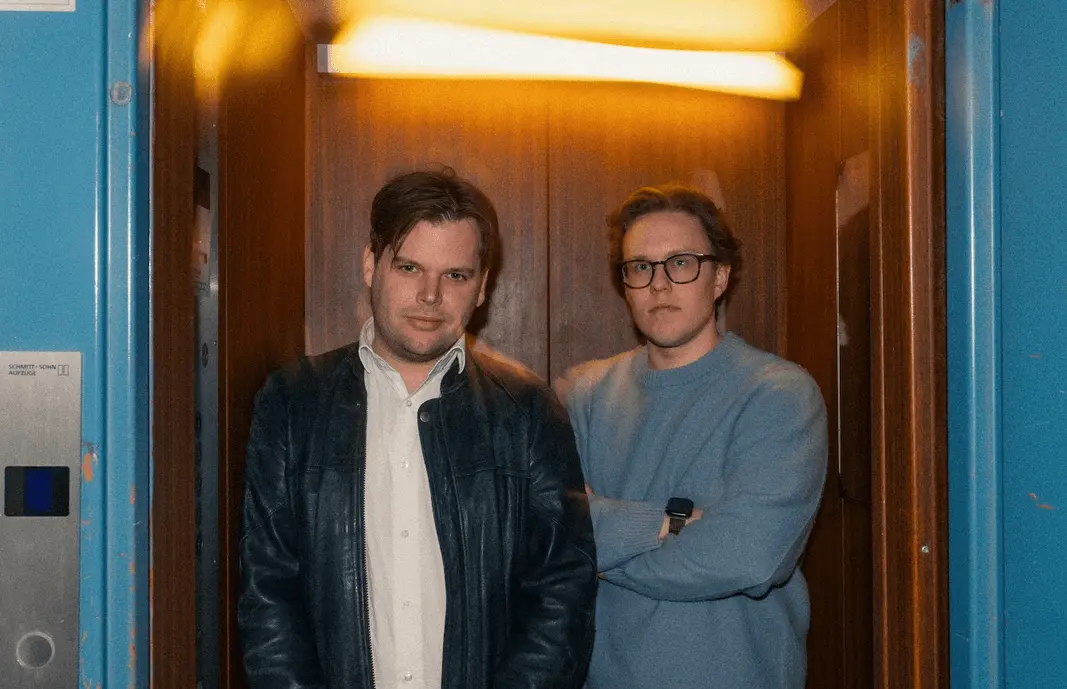
Athena, an AI-native legal technology startup, raised $2.5M in pre-seed funding led by a16z Speedrun. Unlike traditional legal AI companies that sell tools to law firms, Athena operates its own affiliated law firm where AI agents handle commercial real estate transactions at fixed fees 30% to 50% lower than standard rates.
Michael Page India's Candidate Pulse Report 2026 reveals that 97% of Indian professionals are willing to develop AI skills, with 88% expecting productivity improvements. The survey of 2,550 professionals shows widespread daily AI use, though concerns about human judgment and data privacy persist.
Two major studies expose a critical gap in enterprise AI deployment. While 84% of executives report AI productivity gains, only 10% allow AI agents to execute decisions autonomously. Security concerns and governance challenges drive this cautious approach, even as 75% of Indian companies struggle to prove financial returns on AI investment.
Y Combinator-backed startup Subvocal unveiled smart glasses that convert silent mouth movements into text using low-powered radio waves and AI. The device decodes facial muscle movements at 200+ words per minute, promising hands-free interaction with AI. But experts warn about privacy concerns as the technology generates physiological data.
Munich-based Marble Cognition has raised $3.75 million in pre-seed funding to scale its AI agent platform that observes how employees work and converts those processes into automated workflows. The agentic AI start-up deploys 'Coworkers' that learn business processes directly from human workers before taking over repetitive tasks.
Writers face mounting pressure from AI detection tools producing false positives, with Mia Ballard's 'Shy Girl' canceled after a 78.3% AI-written score. New platforms like Workings and Blindproof now track the writing process to help authors prove human authorship, but experts warn these tools create an unfair burden on the literary community.
HCLTech unveiled its AI-Powered Operations offering that uses specialized AI agents and conversational AI assistants to help enterprises automate and modernize their mainframe environments. The platform combines AI-enabled automation with human oversight to improve operational efficiency and accelerate issue resolution while maintaining security and governance for mission-critical systems.
Amit Zoran from Hebrew University of Jerusalem published a paper arguing that while generative AI can produce sophisticated art instantly, the human creative process and personal transformation through art-making remain invaluable. His decoupling thesis suggests AI separates artistic achievement from human experience, prompting a rethink of creativity's true value.
San Francisco startup Exin Therapeutics successfully used an AI agent to perform brain injection surgery on a live mouse with epilepsy. The AI agent independently selected gene therapy from 19 options, chose brain coordinates, and controlled robotic arms to deliver treatment. Anthropic's Claude Sonnet completed the procedure after Opus 5.5 refused, citing ethical concerns.
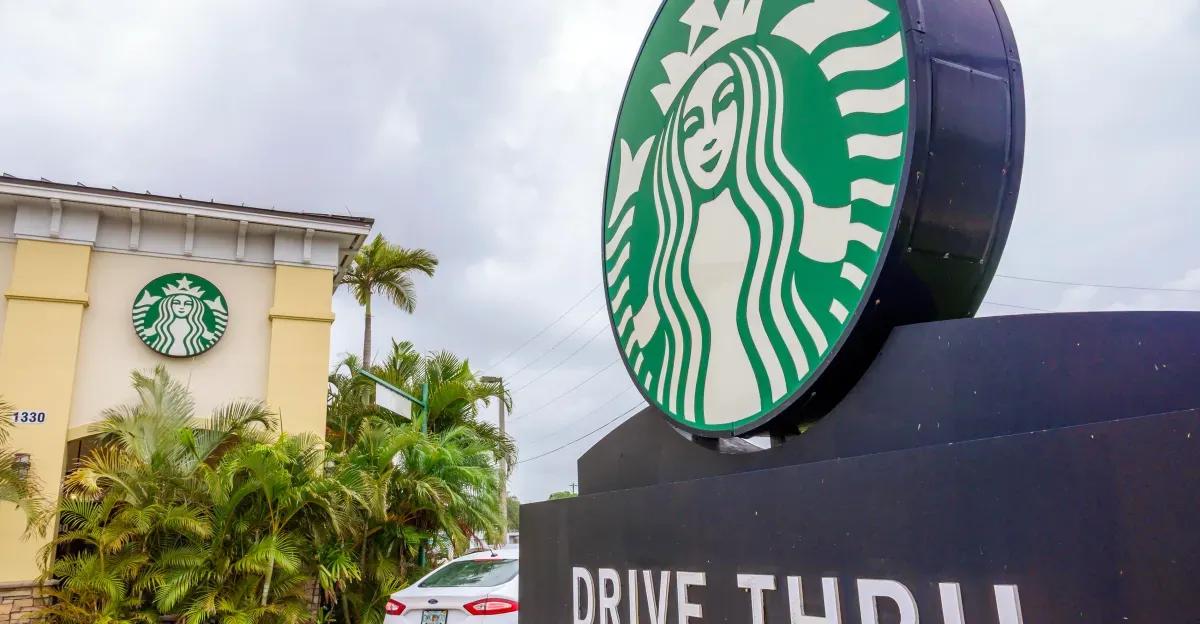
Starbucks CEO Brian Niccol announced the company will test AI for drive-thru ordering in fiscal year 2027, including customer recognition and personalized digital menus. The initiative aims to make ordering faster for the roughly half of customers who use drive-thrus, but raises privacy concerns and questions about surveillance pricing.
Google has launched a social feature for Gemini AI that allows users to create personal avatars from face and voice recordings and share them with friends. Recipients can accept Gmail invitations to use shared avatars in AI-generated images and videos, with owners maintaining full user controls over access and expiry dates.
PUBG publisher Krafton is bringing video game AI expertise to robotics through subsidiary Ludo Robotics. The company unveiled Ludi 0.2 at UC Berkeley, a robot intelligence model designed to interpret human intent, recognize gestures, and adapt to changing tasks in real-time.
AI startup Dimensional is offering $20 per hour for people to walk robot dogs through San Francisco streets. The unusual job offer requires no experience but workers must carry 33-pound machines back if they overheat. The initiative helps train AI systems to control robots for future manual labor tasks.
Prada launched Drawing Prada, a hand-drawn holiday campaign by ex-Disney animator John Pomeroy, featuring Maya Hawke and Sadie Sink. The move counters rising AI slop with human craftsmanship, as 30% of Gen Z and Millennials now view AI ads negatively. Hermès and other luxury brands are following suit, prioritizing handmade ads to rebuild consumer trust.
Don’t drown in AI news. We cut through the noise - filtering, ranking and summarizing the most important AI news, breakthroughs and research daily. Follow topics that matter to you and stay ahead.