Share
Linkedin
Twitter
Facebook
Whatsapp
Copy Link
German robotics startup Neura Robotics has partnered with semiconductor giant Qualcomm to advance AI-powered robotics using Qualcomm's Dragonwing IQ10 processors. The collaboration aims to accelerate deployment of humanoid and general-purpose robots across domestic and industrial settings, marking a growing trend where robotics companies partner with tech giants rather than just being customers.
Nvidia announced NemoClaw at its GTC conference, an open-source AI agent platform designed to address OpenClaw's security challenges. CEO Jensen Huang declared that every company needs an OpenClaw strategy, positioning NemoClaw as enterprise-grade infrastructure with policy-based guardrails, privacy protections, and hardware-agnostic deployment capabilities.
Qualcomm and Arduino launched the Ventuno Q, a single-board computer that combines AI processing with robotics control. The device features the Dragonwing IQ8 processor delivering 40 TOPs of compute power and runs entirely offline. Expected in Q2 2026 for under $300, it targets developers building autonomous systems, smart kiosks, and industrial applications without cloud dependency.
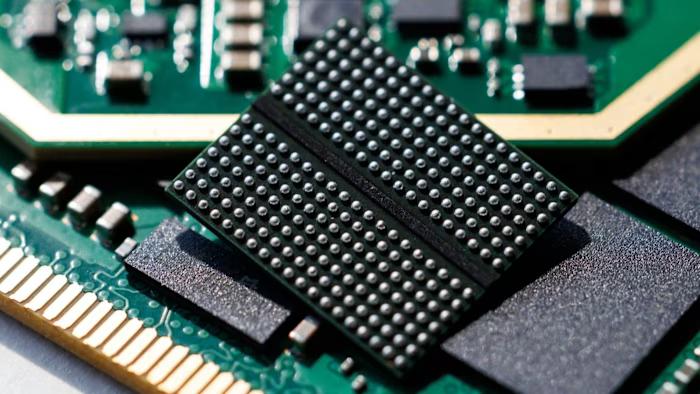
Samsung Electronics and SK Hynix have been confirmed as the sole HBM4 suppliers for Nvidia's Vera Rubin AI accelerator, excluding Micron Technology from the flagship platform. SK Hynix will provide roughly 70 percent of the allocation while Samsung holds approximately 30 percent, marking a significant shift in the AI memory market as demand for high-bandwidth memory intensifies.
Nvidia CEO Jensen Huang declared he loves constraints and called component scarcity 'fantastic' for his company at a recent conference. The shortage forces AI data centers to purchase only high-end hardware, benefiting Nvidia's dominance. With gaming now representing just 8-9% of revenue and data centers driving over $130 billion in 2025, the company holds 94% market dominance in consumer graphics while gamers face triple-priced memory and storage.
Oracle and OpenAI have abandoned plans to expand their flagship AI data center in Abilene, Texas, after negotiations over financing and capacity forecasting broke down. While the expansion is off, Oracle confirms its broader 4.5-gigawatt agreement with OpenAI remains intact, with projects progressing at other U.S. locations including Detroit.
Broadcom is accelerating its position in the AI infrastructure race with a bold $100 billion revenue projection for next year. The company unveiled its Taurus BCM83640 high-speed networking chip and secured critical AI chip supply through 2028, drawing bullish analyst responses as it challenges Nvidia's dominance in custom processors for AI.
Nvidia CEO Jensen Huang announced the chipmaker's $30 billion investment in OpenAI and $10 billion in Anthropic will likely be its last, citing their upcoming IPOs. But the retreat may signal deeper concerns about potential conflicts of interest, geopolitical pressures, and inflated AI valuations as Nvidia shifts focus to maintaining its position as a neutral hardware supplier to competing AI labs.
China unveiled its 15th five-year plan at the National People's Congress, prioritizing artificial intelligence, quantum computing, and semiconductors to reduce reliance on US technology. President Xi Jinping aims to transform China into a tech-driven economy despite a lower growth target of 4.5%-5% and mounting economic pressures from tariffs and trade tensions.
Marvell Technology's stock jumped over 16% after the chipmaker raised its revenue forecast to nearly $11 billion for fiscal 2027, driven by surging demand for custom AI processors from Big Tech companies. The company's fourth-quarter results topped estimates with $2.22 billion in revenue, while CEO Matt Murphy highlighted record design wins that will fuel future growth in the booming AI infrastructure market.
The Trump administration has drafted regulations requiring U.S. government approval for AI chip shipments anywhere in the world, establishing a tiered licensing system based on computing capacity. Large deployments exceeding 200,000 Nvidia GB300 GPUs would require host governments to invest in U.S. AI infrastructure and provide national security assurances, potentially making American AI hardware twice as expensive for foreign buyers.
NVIDIA has stopped producing H200 AI chips intended for China, reallocating TSMC manufacturing capacity to its next-generation Vera Rubin architecture. The strategic pivot follows months of regulatory uncertainty, with the US limiting H200 volume to 75,000 units per customer—far below the millions NVIDIA had anticipated from Chinese hyperscalers.
China announced at the National People's Congress that it now leads the world in AI research and development, along with quantum technology and robotics. The declaration signals Beijing's intensified push for technological independence as it competes with the United States for supremacy in emerging technologies, with plans to expand embodied AI, humanoid robots, and open-source AI communities.
Apple unveiled the MacBook Neo, its first budget laptop starting at $599, marking a strategic shift into the low-cost laptop market. Powered by the A18 Pro chip from the iPhone 16 Pro, the Neo targets students and content creators while delivering AI capabilities at a price point $500 cheaper than the MacBook Air. Preorders are now open with shipping beginning March 11.
Elon Musk declared Tesla will be among the first to create Artificial General Intelligence in humanoid form through its Optimus robot program. The bold prediction comes as Tesla faces its second consecutive year of declining deliveries and mounting scrutiny over Musk's history of missed AI timelines, from self-driving promises to AGI forecasts that repeatedly shift forward.
Don’t drown in AI news. We cut through the noise - filtering, ranking and summarizing the most important AI news, breakthroughs and research daily. Follow topics that matter to you and stay ahead.