Subscribe to our newsletter
Get the latest updates delivered to your inbox every day, and stay up-to-date for free 🧠📈
Share
Linkedin
Twitter
Facebook
Whatsapp
Copy Link
Intel CEO Lip-Bu Tan confirmed the chipmaker is actively developing GPUs with newly hired chief architect Eric Demers from Qualcomm. The move signals Intel's commitment to compete in the lucrative AI and data center GPU market, where Nvidia currently dominates. Intel plans to manufacture these chips internally through its foundry business.
Supermicro delivered a stellar second quarter with revenue jumping 123% to $12.7 billion, fueled by surging demand for AI infrastructure. The company raised its annual revenue forecast to at least $40 billion as GPU-based systems accounted for 84% of quarterly revenue. Despite margin pressures, CEO Charles Liang sees strong growth ahead with Data Center Building Block Solutions.
AMD reported fourth-quarter earnings that beat Wall Street estimates with revenue rising 34% to $10.3 billion, driven by its data center business and AI chip sales. But the company's first-quarter revenue forecast of $9.8 billion, while above consensus, fell short of some investor expectations who sought bigger AI gains. Shares tumbled 13% as concerns emerged about AMD's ability to compete with Nvidia in the booming AI market.
Intel and SoftBank subsidiary Saimemory signed a collaborative agreement to develop Z-Angle Memory (ZAM), a vertically-stacked memory technology designed to compete with High Bandwidth Memory in AI data centers. The next-generation memory promises 2 to 3 times more capacity, greater bandwidth, and half the power consumption of HBM, with prototypes expected in 2027 and mass production targeted for 2029.
Five months after announcing plans for a $100 billion investment, Nvidia and OpenAI's mega-deal has stalled. The chipmaker now plans a $20 billion investment instead, while OpenAI quietly pursues alternative chip providers. The tension centers on inference performance issues, with OpenAI reportedly dissatisfied with Nvidia's GPU speed for coding tasks, prompting deals with Cerebras and AMD to reduce dependency.
Memory chip prices are experiencing their steepest increases in history, with DRAM contract prices jumping 90-95% in Q1 2026. TrendForce revised its forecasts upward as persistent AI and data center demands worsen the global memory supply and demand imbalance. PC memory prices are doubling while NAND flash surges 55-60%, forcing device makers to warn of higher costs ahead.
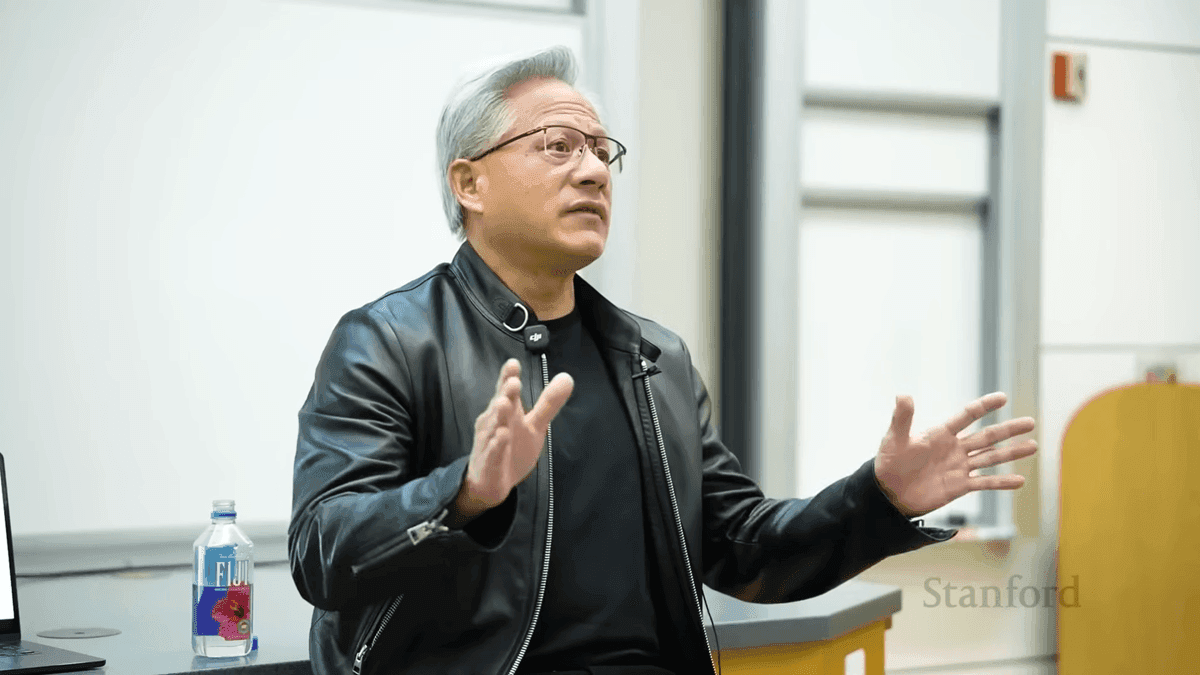
Nvidia CEO Jensen Huang has officially confirmed the company's next-gen N1X and N1 Arm-based processors developed with MediaTek for AI PCs and gaming laptops. The chips promise RTX 5070-level GPU performance with low power consumption, directly challenging Intel Core Ultra and AMD Ryzen AI processors in the AI PC CPU market.
A UAE-backed entity tied to Sheikh Tahnoon bin Zayed invested $500 million for 49% of World Liberty Financial four days before Trump's inauguration. The Trump family received $187 million from the deal, which preceded a U.S. policy shift granting the UAE access to 500,000 advanced AI chips annually—technology the Biden administration had blocked over national security concerns.
South Korea posted record January exports of $65.8 billion, marking a 33.9% year-on-year increase driven by booming demand for AI chips. Semiconductor exports more than doubled at 102.7%, reaching $20.5 billion as memory prices climbed on AI server demand. The milestone comes as Seoul navigates rising trade tensions with the U.S. over tariffs and ratification disputes.
Nvidia CEO Jensen Huang told reporters that TSMC needs to work very hard to meet soaring AI demand, warning the chipmaker may need to double production capacity over the next decade just to satisfy Nvidia's requirements alone. Speaking after a trillion-dollar dinner with key suppliers in Taiwan, Huang emphasized the unprecedented scale of capacity expansion needed as AI infrastructure buildout accelerates globally.
Nvidia CEO Jensen Huang dismissed reports that the chip giant's planned $100 billion investment in OpenAI has stalled, calling such claims 'nonsense.' Despite Wall Street Journal reports of friction and concerns about OpenAI's business discipline, Huang confirmed Nvidia will make its 'largest ever investment' in the AI company, though the final amount remains unspecified.
Chinese AI chipmaker Axera Semiconductor is seeking to raise $379.2 million through a Hong Kong IPO, offering 104.9 million shares at HK$28.20 each. The company, backed by Tencent and Qiming Venture Partners, claims to be the largest provider of mid-to-high-end visual on-device AI inference chips globally. The move reflects a broader trend of Chinese semiconductor firms turning to Hong Kong for capital-intensive chip development.
KLA Corp reported second-quarter revenue of $3.3 billion, surpassing Wall Street expectations as AI infrastructure demand accelerates investment in advanced logic chips and high-bandwidth memory. The semiconductor equipment maker saw net profit climb 39% to $1.15 billion, though supply constraints and rising DRAM costs present near-term challenges. Despite strong results, shares fell 7% as investors questioned whether growth momentum can sustain amid U.S. export restrictions on China.
Japanese flash memory maker Kioxia is promoting Hiroo Oota to CEO as it positions itself to capitalize on surging demand for NAND storage in AI data centers. While competitors Samsung, SK Hynix, and Micron focus on high-bandwidth memory, Kioxia sees opportunity in high-density storage solutions. The company's shares have jumped more than 13 times since its late 2024 IPO, reflecting investor confidence in its strategic positioning.
Taiwan's economy expanded 8.6% in 2025, marking its fastest economic growth in 15 years as the global artificial intelligence boom powered record tech exports. The island's Q4 GDP surged 12.68%, far exceeding forecasts, driven by robust global demand for AI chips and semiconductors from companies like Nvidia and Apple.
Don’t drown in AI news. We cut through the noise - filtering, ranking and summarizing the most important AI news, breakthroughs and research daily. Follow topics that matter to you and stay ahead.