Share
Linkedin
Twitter
Facebook
Whatsapp
Copy Link
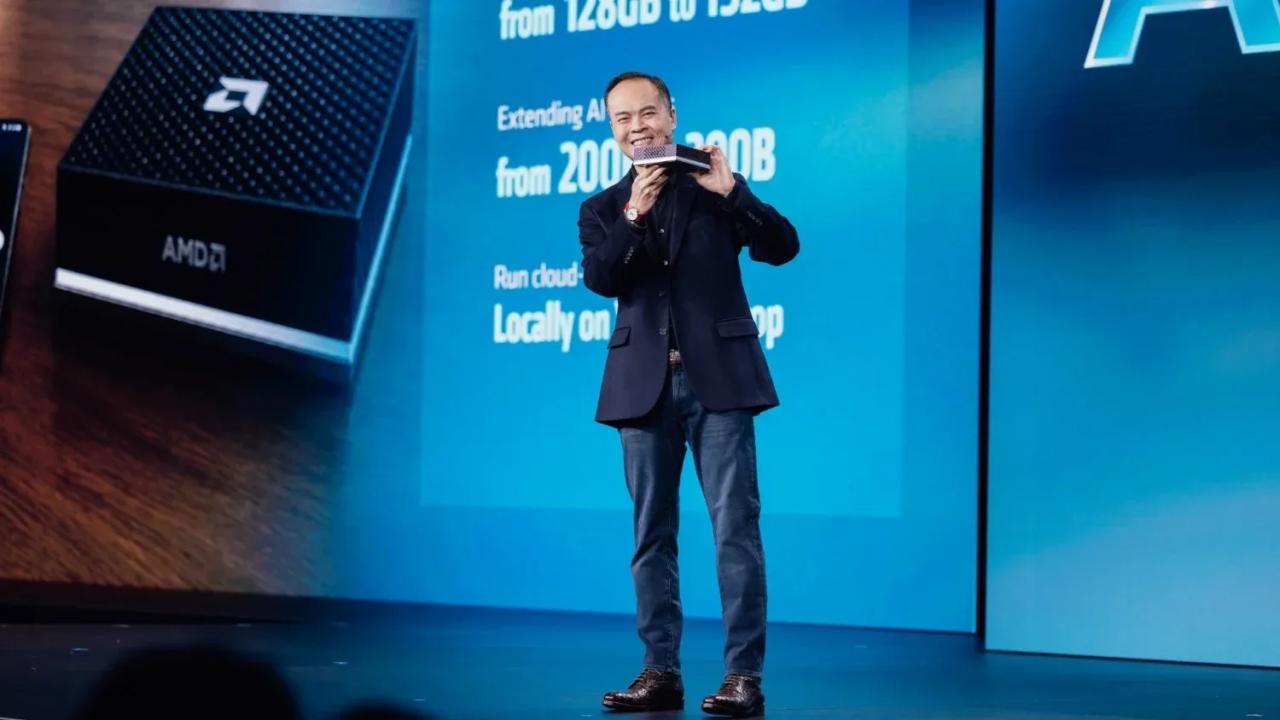
Anker unveiled Thus, its first custom AI chip designed to bring local AI processing to compact devices like earbuds. The compute-in-memory architecture processes neural networks directly inside NOR flash memory cells, enabling larger AI models to run on battery-constrained wearable devices. The chip debuts in Soundcore earbuds on May 21.
Volkswagen announced it will equip new cars built for China with AI agents starting in the second half of 2026, as the German automaker scrambles to catch up with Chinese competitors. The AI voice assistants will handle complex tasks like restaurant bookings and parking, using technology from Alibaba, Tencent, and Baidu. The move is part of Volkswagen's strategy to regain market share in the world's largest car market.
AMD is preparing to launch multi-frame generation support for its Radeon graphics cards, over a year after Nvidia introduced the technology. A recent update to the FidelityFX SDK reveals new frame generation ratio options, suggesting AMD will finally match competitors in AI-driven frame generation capabilities while addressing concerns about latency performance.
Victory Giant Technology, a Chinese supplier to Nvidia, saw its shares rocket nearly 60% on its Hong Kong debut after raising $2.6 billion in the city's largest listing in seven months. The printed circuit board maker attracted 37 cornerstone investors and plans to expand production capacity in mainland China as demand for AI hardware intensifies.
Apple announced John Ternus will succeed Tim Cook as CEO this September, bringing 25 years of hardware engineering expertise to the role. As the new CEO, Ternus faces immediate pressure to deliver a killer AI product while navigating tariffs, supply chain challenges, and growing competition. His appointment signals a renewed focus on AI-powered devices rather than competing directly in AI model development.
Google commits to invest up to $40 billion in Anthropic, with $10 billion immediate and $30 billion tied to performance targets. The deal values Anthropic at $350 billion and follows Amazon's $5 billion investment days earlier. Both tech giants are racing to secure computing capacity for Claude AI models amid surging demand.
AMD is preparing to integrate Co-Packaged Optics into its Instinct MI500 AI accelerators, partnering with GlobalFoundries for photonic integrated circuits and ASE for packaging. The 2027 launch aims to address interconnect bandwidth bottlenecks in AI infrastructure as the silicon photonics race with NVIDIA intensifies.
Google unveiled its eighth-generation Tensor Processing Units at Cloud Next, marking a strategic shift by splitting capabilities into two specialized chips. The TPU 8t targets AI model training with 2.8x performance gains, while TPU 8i focuses on inference with 80% better performance per dollar. Both chips ditch x86 for custom Axion ARM CPUs, signaling Google's push for full-stack efficiency in the agentic era.
Researchers have developed a breakthrough method for using quantum computers to boost AI performance on massive datasets. The technique allows quantum machines to process data in smaller batches without requiring impossibly large memory systems. A quantum computer with just 300 logical qubits could outperform a classical computer built using every atom in the observable universe for certain AI tasks.
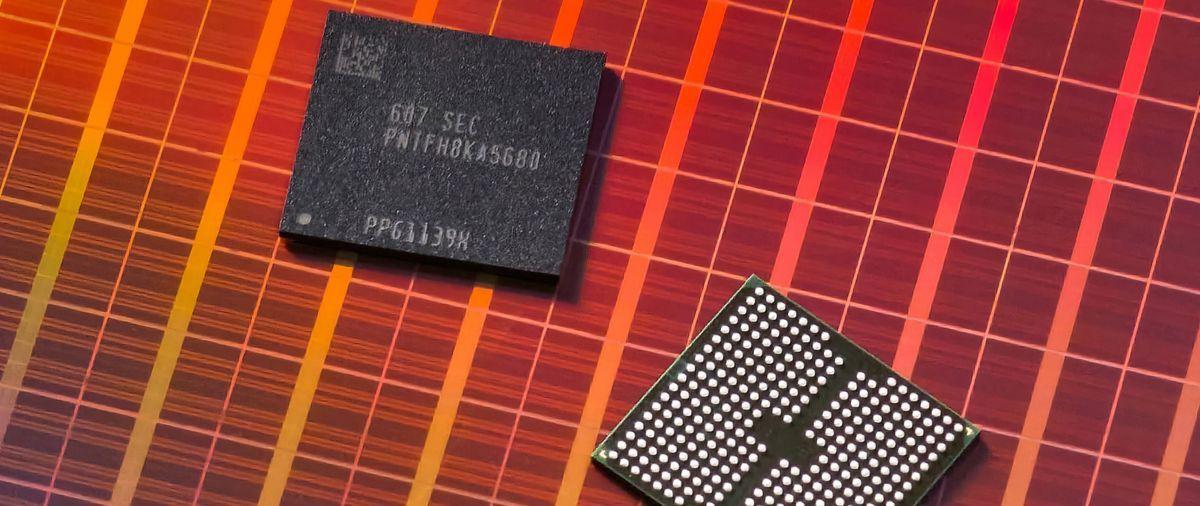
SK hynix has started mass production of its 192GB SOCAMM2 memory module targeting NVIDIA's Vera Rubin AI platform. Built on LPDDR5X technology and 1c-class DRAM process, the module delivers more than double the bandwidth and over 75% improved power efficiency compared to conventional RDIMM modules, addressing critical memory bottlenecks in AI server deployments.
The global memory shortage shows no signs of easing, with manufacturers expected to meet only 60% of demand by 2027. AI's appetite for high-bandwidth memory is pushing DRAM and NAND prices to record highs, forcing Samsung to consider its first-ever smartphone loss while consumers face steeper prices for phones, laptops, and other devices.
Google is negotiating with Marvell Technology to design two new AI chips—a memory processing unit and an inference-optimized TPU—adding a third partner to its custom silicon supply chain alongside Broadcom. The move signals Google's strategy to diversify chip suppliers as inference workloads become the dominant compute cost in AI.
Cerebras Systems, an AI chipmaker building wafer-scale processors, has filed publicly for an IPO months after withdrawing a previous attempt. The company brought in $510 million in revenue in 2025 with a $24.6 billion backlog, including a massive $20 billion deal with OpenAI. But despite 20x revenue growth since 2022, Cerebras remains operationally unprofitable with 86% of revenue coming from just two customers.
Google is in talks with the U.S. Department of Defense to deploy Gemini AI models in classified settings for the first time. The negotiations include deploying tensor processing units inside secure environments and adding GPU capacity to Google Distributed Cloud, which holds DoD Impact Level 6 authorization. Google pushes for contract language prohibiting domestic mass surveillance and autonomous weapons without human oversight.
AI infrastructure startup Upscale AI is negotiating a new funding round that would value the company at $2 billion, just seven months after emerging from stealth. The Santa Clara-based company aims to raise $180-200 million despite not yet releasing a product, betting on custom chips and full-stack infrastructure solutions to transform how AI data centers operate.
Don’t drown in AI news. We cut through the noise - filtering, ranking and summarizing the most important AI news, breakthroughs and research daily. Follow topics that matter to you and stay ahead.